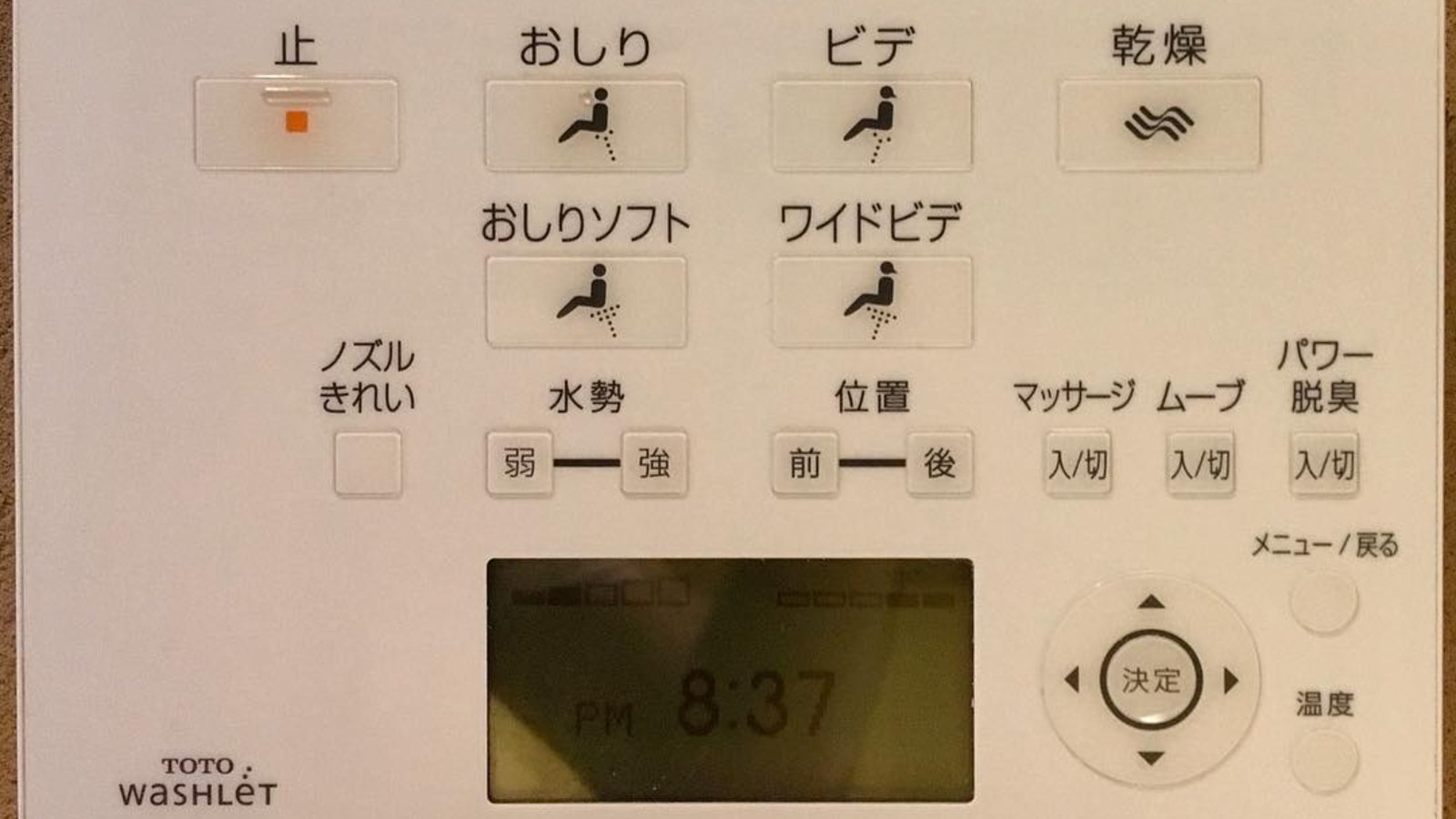
The short version: A bidet seat’s warm air dryer blows heated air at the washed area so you need little or no paper afterward. Expect a few minutes per use, not seconds: built-in cycles run about 2 to 3 minutes on most seats, and TOTO’s C5 can run up to about 10 minutes before it stops itself. It is worth paying for if reaching behind is hard; most other owners still finish with a quick pat dry.
Most electric bidet seats include a warm air dryer, often near the top of the feature list. What the spec sheet does not tell you is how long it takes, how warm it gets, or whether you will still reach for paper. This guide pulls those details from manufacturer manuals and spec sheets for TOTO, Brondell, Bio Bidet, Alpha and Coway seats, and from what owners report after living with them.
On this page
What a Bidet Dryer Does
A bidet dryer is a small fan and heater built into the back of an electric seat. When you press Dry, it pushes warm air out of a vent near the nozzle housing toward the area you just washed. There is nothing to hold and nothing to aim. You stay seated, and the air does the work that a wipe or a towel would otherwise do.
The airflow is gentle rather than forceful. TOTO lists the Washlet C5’s dryer at about 8.83 cubic feet per minute. That gentle flow is the reason drying takes a while. The dryer evaporates water; it does not blast it away.
Dryers are found only on electric bidet seats, because the fan and heater need power. Non-electric attachments that fit under your existing seat have no dryer at all. If you are still deciding between the two styles, our guide to bidet attachments versus seats covers the wider trade-offs.
How Long Drying Takes
Manufacturers tend to describe drying in optimistic terms. Brondell says drying usually takes 1 or 2 minutes, and Bio Bidet describes its dryers as working in a minute or two. The built-in cycle lengths tell a similar story: Coway’s BA13 and Brondell’s Swash CL1700 each run a 2-minute cycle, and Bio Bidet’s BB-2000 manual says its dryer runs for about 3 minutes.
Owner experience is less tidy. People who rely on the dryer alone describe sitting for what one called “an admittedly longish while,” and many press Dry a second time when the first cycle ends. On the TOTO C5, owners describe the dryer as weaker than the rest of the seat. Several minutes per visit is a realistic expectation if you want to be fully dry with air alone.
For that reason, most owners settle into a combined routine: a short dryer run, then a light pat with a square or two of paper. Coway’s own manual points the other way round, suggesting you lightly wipe off excess water before starting the dryer so it finishes faster. Either order works, and both cut paper use well below what a dry wipe alone would need.
Dryer Specs by Model
Few manufacturers publish full dryer specs, and they rarely publish the same ones. The table below shows what each manual, spec sheet or product page states. Where a box says “not listed,” the manufacturer does not give that figure.
| Model | Dryer temperature | Settings | Cycle or auto stop | Dryer heater | Seat max power |
|---|---|---|---|---|---|
| TOTO Washlet C5 | About 95 to 140°F | Low, medium, high (cannot be turned off) | Stops after about 10 minutes of continuous use | 347 W | 512 W |
| Brondell Swash 1400 | Not listed | 4 levels | Not listed | Not listed | 1,200 W rated |
| Brondell Swash CL1700 | Not listed | 5 levels | 2-minute cycle | Not listed | 870 W |
| Bio Bidet BB-2000 | Not listed | Adjustable with High and Low buttons | About 3 minutes | Not listed | Not listed |
| Alpha JX | Ambient to 122°F | Adjustable | Not listed | Not listed | 1,460 W |
| Alpha GX Wave | Room temperature to 131°F | Adjustable | Not listed | Not listed | 864 W |
| Coway BA13 | Not listed | Off, low, medium, high | 2 minutes, then stops automatically | 180 W | 1,200 W |
Seat max power is the figure for the whole seat, with the water heater, seat heater and dryer included, so it says little about the dryer alone. The water heater is usually the largest load. A tankless seat with a big instant heater can show a high total even if its dryer is modest.
Temperature Settings and Automatic Stops
Where manufacturers publish a figure, the top setting falls between 122°F and 140°F, and every seat in the table has an adjustable dryer temperature. Lower settings feel milder but dry more slowly. If the air feels too warm, step it down one level and accept a slightly longer run.
The automatic stop matters more than the top temperature. A 2- or 3-minute cycle ends on its own, and pressing Dry again starts another. The C5 runs much longer, stopping itself after about 10 minutes of continuous use. The dryer also depends on the seat sensor. Bio Bidet BB-2000 owners note that standing up ends the cycle, and if the C5’s dryer stops early, TOTO’s manual suggests sitting back fully on the seat.
TOTO’s manual also warns against sitting on the seat for long periods because of the risk of low-temperature burns, and against covering the warm air outlet. Anyone with reduced skin sensation should ask their doctor whether the warmer dryer and seat settings are suitable before using them, and may prefer to keep both on low.
Power Draw and Running Cost
Only two manufacturers in the table break out the dryer heater: 347 W for the TOTO C5 and 180 W for the Coway BA13. Either way, it runs for minutes at a time, not hours. The dryer does not change the outlet you need, since the seat already requires a grounded, GFCI-protected outlet within reach of its cord. Our guide to bidet outlet requirements covers that.
The running cost is small. At the US Energy Information Administration’s forecast average of 18.2 cents per kWh for 2026, three minutes at 347 W comes to about a third of a cent. Even a full 10-minute run on the C5 works out to about one cent. These figures assume the heater runs flat out the whole time, so the real cost is likely lower.
How Much a Dryer Adds to the Price
Manufacturers rarely sell the same seat with and without a dryer, so the premium is hard to isolate. TOTO’s entry line comes closest. The Washlet A2, which has no dryer, carries a $540 MSRP. The KC2, at $641, adds a warm air dryer with three temperature settings, along with a pulsating massage, a seamless seat and a round-bowl option.
So in that line, the dryer arrives as part of a roughly $100 step up rather than as a separate option. Across the market, dryers are not limited to expensive seats. Bio Bidet says most, but not all, electric seats include one, and Alpha has listed its GX Wave, which has a dryer, at $299. For a fuller picture of what drives seat prices, see how much a bidet costs.
Who Benefits Most
The dryer earns its keep when the final wipe is the hard part of using the toilet. For some households, it removes the one step that still needs a twist, a reach or a helper.
People Who Find Reaching Behind Hard
Shoulder stiffness, back limits, a weak grip or balance concerns can all make reaching behind awkward. A dryer reduces that reach, or shortens it to a brief pat. Pair it with a seat whose remote is easy to reach and read, so starting and stopping the dryer does not become its own problem. Our guide to bidet seats for limited mobility covers the features that matter alongside it.
Caregivers
When one person helps another with toileting, every step that the seat handles is one less hands-on task. A dryer can mean a shorter visit, less paper to manage and more privacy for the person being helped. It also helps to set the dryer temperature once and leave it; the BB-2000 manual notes that the seat remembers the last air temperature used. The bidet caregiver guide covers the rest of the routine.
Who Can Skip It
If you can pat dry comfortably and you dislike waiting, the dryer may go unused. Impatience with the cycle is a common complaint among owners. A household on a tight budget can also skip it and put the money toward features that save more effort, such as a remote or on-demand warm water.
Expectations matter too. If you are buying a dryer to go completely paperless, plan instead for using much less paper. That is still a real change, and our comparison of bidets and toilet paper looks at it in more detail.
Alternatives to a Built-In Dryer
The simplest alternative is a light pat with a few squares of toilet paper. Because the bidet has already done the cleaning, Brondell recommends a gentle pat rather than a wipe, which is also kinder to skin. Bio Bidet notes that very little water stays on the skin after a minute or two of sitting, so a short pause before patting means less paper.
Reusable cloths are the other option. Both Brondell and Bio Bidet sell soft bidet towels or washcloths meant only for drying. Brondell’s care advice is to wash them cold with a gentle detergent and no liquid fabric softener. Keep a small lidded basket beside the toilet for used cloths, and give each household member their own.
Whichever you choose, a few habits help if you do have a dryer:
- Pat off the excess water first, then run the dryer to finish.
- Sit fully back on the seat so the sensor keeps the dryer running.
- Start on a middle setting and adjust from there.
- Keep the warm air outlet uncovered and clean.
The Verdict
For most buyers, a warm air dryer is a pleasant extra rather than a deciding feature. It works, it costs very little to run, and it trims paper use, but it takes minutes and usually ends with a quick pat. Because so many electric seats include one anyway, you rarely need to pay much extra for it.
For someone who struggles to reach behind, or for a caregiver trying to shorten a hands-on routine, the dryer moves up the list. In that case, check the dryer’s cycle length and controls in the manual before you buy. Seats we have reviewed, including the Brondell Swash 1400 and the Bio Bidet BB-2000, both include adjustable dryers.
Image credit, cropped: photo by Volgar from Stockholm, Sweden, Wikimedia Commons, CC BY-SA 2.0.